Oppo Reno12 (China) vs Xiaomi 15S Pro
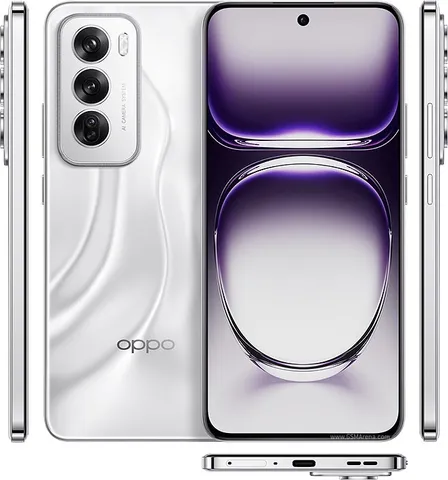

The Oppo Reno12 (China) (2024) runs on the MediaTek Dimensity 8250, while the Xiaomi 15S Pro (2025) runs on the Xiaomi XRING O1. By overall MobileRank rating, the Xiaomi 15S Pro leads — 84/100 vs 66/100 (a 18-point difference). Key differences: the Xiaomi 15S Pro has the bigger battery (6100 mAh vs 5000).
Oppo Reno12 (China)
Xiaomi 15S Pro
- Overall rating 66/100
- Bigger battery: 6100 vs 5000 mAh
- Faster charging: 90W vs 80W
- Better camera (78/100 vs 64/100)
- Longer battery life (77/100 vs 56/100)
- Better display (90/100 vs 80/100)
Comparing the Oppo Reno12 (China) vs the Xiaomi 15S Pro, the Xiaomi 15S Pro scores 18 points higher (84/100 vs 66/100). In the "camera" category, the Xiaomi 15S Pro leads (78/100 vs 64/100). In the "battery" category, the Xiaomi 15S Pro leads (77/100 vs 56/100). In the "display" category, the Xiaomi 15S Pro is a bit better (90/100 vs 80/100). In the "camera" category, the Xiaomi 15S Pro is a bit better (78/100 vs 64/100). In the "battery" category, the Xiaomi 15S Pro notably outperforms the Oppo Reno12 (China) (77/100 vs 56/100).
| Specification | Oppo Reno12 (China) | Xiaomi 15S Pro | |
|---|---|---|---|
| Processor | MediaTek Dimensity 8250 | Xiaomi XRING O1 | |
| AnTuTu | — | 2998904 | |
| Geekbench Single | — | 2746 | |
| Geekbench Multi | — | 8431 | |
| Display | 6.7" AMOLED | 6.7" LTPO AMOLED | |
| Resolution | 1080x2412 | 3200x1440 | |
| Refresh rate | 120 Hz | 120 Hz | |
| Battery | 5000 mAh | 6100 mAh | |
| Charging | 80W | 90W | |
| Main camera | 50 MP | 50 MP | |
| Ultrawide | 8 MP | 50 MP | |
| Telephoto | 50 MP | 50 MP | |
| Front camera | 50 MP | 32 MP | |
| RAM | 12GB / 16GB | 16GB | |
| Storage | 256GB / 512GB | 512GB / 1TB | |
| OS | Android 14, ColorOS 14.1 | Android 15 | |
| Brightness (peak) | 1200 nits | — | |
| NFC | yes | — | |
| Protection | IP65 | — | |
| Dimensions | 161.4×74.8×7.3 mm | — | |
| Weight | 179 g | — | |
| Launch price | — | $760 |
Oppo Reno12 (China)
- Main: 50MP f/f/1.8
- Ultrawide: 8MP
- Telephoto: 50MP
- Front: 50MP
Xiaomi 15S Pro
- Main: 50MP f/f/1.8
- Ultrawide: 50MP
- Telephoto: 50MP
- Front: 32MP
Oppo Reno12 (China)
- 6.7" AMOLED
- Resolution: 1080x2412
- Refresh rate: 120 Hz
Xiaomi 15S Pro
- 6.7" LTPO AMOLED
- Resolution: 3200x1440
- Refresh rate: 120 Hz
Oppo Reno12 (China)
- 5000 mAh
- Wired: 80W
- No wireless charging
Xiaomi 15S Pro
- 6100 mAh
- Wired: 90W
- Wireless charging: no data
Oppo Reno12 (China)
Price unknowndisplay
In the "display" category, the Xiaomi 15S Pro is a bit better (90/100 vs 80/100).
camera
In the "camera" category, the Xiaomi 15S Pro is a bit better (78/100 vs 64/100).
battery
In the "battery" category, the Xiaomi 15S Pro notably outperforms the Oppo Reno12 (China) (77/100 vs 56/100).
Which is better: the Oppo Reno12 (China) or the Xiaomi 15S Pro?
The Xiaomi 15S Pro is noticeably better than the Oppo Reno12 (China) — the overall rating gap is 18 points.
What is the rating of the Oppo Reno12 (China) and the Xiaomi 15S Pro?
The Oppo Reno12 (China) has a MobileRank rating of 66/100, the Xiaomi 15S Pro — 84/100.
Which has the better camera: the Oppo Reno12 (China) or the Xiaomi 15S Pro?
The Xiaomi 15S Pro leads on camera score (78/100 vs 64/100).
Should you choose the Oppo Reno12 (China) over the Xiaomi 15S Pro?
The Oppo Reno12 (China) is a better fit for everyday use. The Xiaomi 15S Pro is a better fit for gamers and power users, those who care about battery life, budget-conscious buyers.