Poco M6 Pro vs Samsung Galaxy S26 Ultra
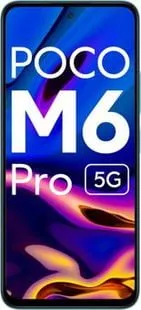
The Poco M6 Pro (2024) runs on the MediaTek Helio G99 Ultra, while the Samsung Galaxy S26 Ultra (2026) runs on the Qualcomm Snapdragon 8 Elite Gen 5; launch prices were $220 and $1299. By overall MobileRank rating, the Samsung Galaxy S26 Ultra leads — 84/100 vs 53/100 (a 31-point difference). Key differences: the main camera is 64 MP vs 200 MP; the Samsung Galaxy S26 Ultra is faster in AnTuTu (3,515,964 vs 551,784); the Poco M6 Pro is noticeably lighter (179g vs 214g).
Poco M6 Pro
Samsung Galaxy S26 Ultra
- Faster charging: 67W vs 60W
- Lighter: 179g vs 214g
- Cheaper at launch: $220 vs $1299
- Longer battery life (62/100 vs 61/100)
- Better portability (80/100 vs 51/100)
- Higher AnTuTu: 3515964 vs 551784
- Better Geekbench Single: 3601 vs 730
- Better Geekbench Multi: 10686 vs 1983
- Better main camera: 200MP vs 64MP
- Higher performance (96/100 vs 43/100)
- Better camera (86/100 vs 43/100)
- Better display (88/100 vs 79/100)
Comparing the Poco M6 Pro vs the Samsung Galaxy S26 Ultra, the Samsung Galaxy S26 Ultra scores 31 points higher (84/100 vs 53/100). In the "performance" category, the Samsung Galaxy S26 Ultra leads (96/100 vs 43/100). In the "camera" category, the Samsung Galaxy S26 Ultra leads (86/100 vs 43/100). Value score: Poco M6 Pro — 64/100, Samsung Galaxy S26 Ultra — 76/100; it is biased by price level, so it should not be compared directly between devices at different prices. In the "performance" category, the Samsung Galaxy S26 Ultra significantly outperforms the Poco M6 Pro (96/100 vs 43/100). In the "display" category, the Samsung Galaxy S26 Ultra is a bit better (88/100 vs 79/100). In the "camera" category, the Samsung Galaxy S26 Ultra significantly outperforms the Poco M6 Pro (86/100 vs 43/100). In the "battery" category, the Poco M6 Pro and the Samsung Galaxy S26 Ultra are nearly equal (62/100 vs 61/100). In the "portability" category, the Poco M6 Pro notably outperforms the Samsung Galaxy S26 Ultra (80/100 vs 51/100).
| Specification | Poco M6 Pro | Samsung Galaxy S26 Ultra | |
|---|---|---|---|
| Processor | MediaTek Helio G99 Ultra | Qualcomm Snapdragon 8 Elite Gen 5 | |
| AnTuTu | 551784 | 3515964 | |
| Geekbench Single | 730 | 3601 | |
| Geekbench Multi | 1983 | 10686 | |
| Display | 6.7" AMOLED | 6.9" Dynamic AMOLED 2X | |
| Resolution | 2400x1080 | 3120x1440 | |
| Refresh rate | 120 Hz | 120 Hz | |
| Battery | 5000 mAh | 5000 mAh | |
| Charging | 67W | 60W | |
| Wireless charging | — | 25W | |
| DXOMark (camera) | — | 157 | |
| Main camera | 64 MP | 200 MP | |
| Ultrawide | 8 MP | 50 MP | |
| Telephoto | 0 MP | 50 MP | |
| Front camera | 16 MP | 12 MP | |
| RAM | 8GB / 12GB | 12GB / 16GB | |
| Storage | 256GB / 512GB | 256GB / 512GB / 1TB | |
| OS | Android 13 / MIUI 14 | Android 16 / One UI 8.5 | |
| Brightness (peak) | — | 2600 nits | |
| NFC | — | yes | |
| Protection | — | IP68 | |
| Dimensions | — | 163.6×78.1×7.9 mm | |
| Weight | 179 g | 214 g | |
| Launch price | $220 | $1299 |
Poco M6 Pro
- Main: 64MP f/f/1.79
- Ultrawide: 8MP
- Front: 16MP
Samsung Galaxy S26 Ultra
- Main: 200MP f/f/1.7
- Ultrawide: 50MP
- Telephoto: 50MP
- Front: 12MP
Poco M6 Pro
- 6.7" AMOLED
- Resolution: 2400x1080
- Refresh rate: 120 Hz
Samsung Galaxy S26 Ultra
- 6.9" Dynamic AMOLED 2X
- Resolution: 3120x1440
- Refresh rate: 120 Hz
Poco M6 Pro
- 5000 mAh
- Wired: 67W
- Wireless charging: no data
Samsung Galaxy S26 Ultra
- 5000 mAh
- NanoReview test: web browsing 10:12 hrs, total 28:50 hrs
- Wired: 60W
- Wireless: 25W
We compared Poco M6 Pro and Samsung Galaxy S26 Ultra, covering their specs and all relevant benchmarks.
Samsung Galaxy S26 Ultra leads Poco M6 Pro by 84.3% in our overall performance rating.
Launch price difference: $1079. Poco M6 Pro was $1079 cheaper at launch.
performance
In the "performance" category, the Samsung Galaxy S26 Ultra significantly outperforms the Poco M6 Pro (96/100 vs 43/100).
display
In the "display" category, the Samsung Galaxy S26 Ultra is a bit better (88/100 vs 79/100).
camera
In the "camera" category, the Samsung Galaxy S26 Ultra significantly outperforms the Poco M6 Pro (86/100 vs 43/100).
battery
In the "battery" category, the Poco M6 Pro and the Samsung Galaxy S26 Ultra are nearly equal (62/100 vs 61/100).
portability
In the "portability" category, the Poco M6 Pro notably outperforms the Samsung Galaxy S26 Ultra (80/100 vs 51/100).
Which is better: the Poco M6 Pro or the Samsung Galaxy S26 Ultra?
The Samsung Galaxy S26 Ultra significantly outperforms the Poco M6 Pro by 31 points (84/100 vs 53/100).
What is the rating of the Poco M6 Pro and the Samsung Galaxy S26 Ultra?
The Poco M6 Pro has a MobileRank rating of 53/100, the Samsung Galaxy S26 Ultra — 84/100.
Which has the better camera: the Poco M6 Pro or the Samsung Galaxy S26 Ultra?
The Samsung Galaxy S26 Ultra leads on camera score (86/100 vs 43/100).
Which is more powerful: the Poco M6 Pro or the Samsung Galaxy S26 Ultra?
The Samsung Galaxy S26 Ultra leads on performance (96/100 vs 43/100).
Should you choose the Poco M6 Pro over the Samsung Galaxy S26 Ultra?
The Poco M6 Pro is a better fit for everyday use. The Samsung Galaxy S26 Ultra is a better fit for gamers and power users, mobile photography enthusiasts, budget-conscious buyers.